Territory: Pompeii and surroundings
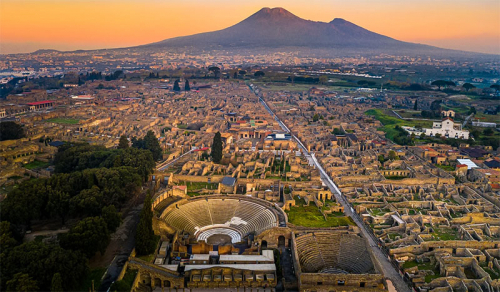
Pompeii is known throughout the world for its ancient city buried by the eruption of Vesuvius in 79 AD.
The ruins of the vast archaeological site of Pompeii show what was once a thriving and sophisticated Roman city.
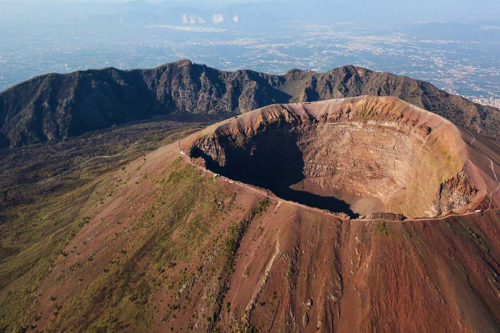
Vesuvio
Vesuvius is almost certainly the best-known volcano in the world. The Neapolitan people fear and venerate this enormous sleeping giant, making it the symbol of the city.
Its eruption in 79 AD it is perhaps the most famous of the eruptions known in the world and has allowed, with its ash and its lapilli, to crystallize the daily life, the loves, the vices and the virtues of a city of 2000 years ago.
It can be said that "thanks" to Vesuvius it is possible to make a real leap in time.
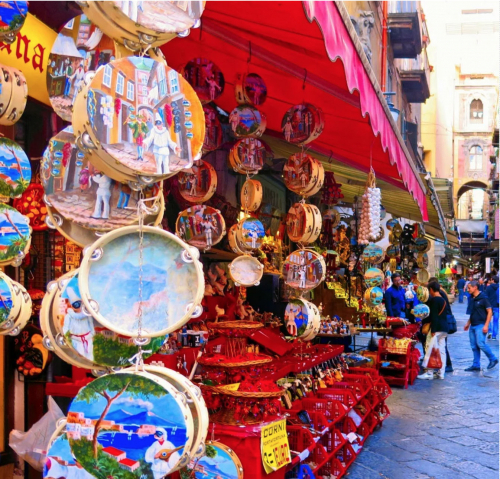
Napoli
Just 30 kilometers from Pompeii you cannot help but admire the beauty of the Campania capital.
Naples is a city and one of the most evocative and history-rich cities of our Peninsula. Visiting Naples means immersing yourself in its teeming neighborhoods and splendid monuments, such as the Spanish Quarter, the Duomo and the Royal Palace, just to name a few.
From Spaccanapoli to the Maschio Angioino...
On the list of what to see in Naples you certainly cannot miss a tour of Spaccanapoli, the road that connects the Spanish neighborhoods with the Forcella district. The name of this street derives from the fact that it divides the city of Naples like a straight line: its origin is very ancient, being one of the 3 decumani according to which the Romans organized the city. Spaccanapoli characterizes the soul of Naples: here you will find ancient buildings, churches and above all the scents and everyday life that define its identity. The historic center of Naples, declared a UNESCO World Heritage Site, also characterizes the identity of the city.
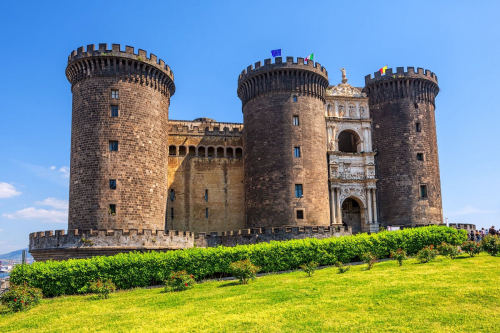
Castel nuovo o Maschio Angioino
Castel Nuovo, better known as Maschio Angioino, certainly cannot be missing from the list of what to see in Naples. It is a historic castle whose construction began under the reign of Charles I of Anjou. Its strategic position - the castle is in fact located in Piazza Municipio, in the port area - made it not only a royal residence, but also a fundamental fortress during the war. The Maschio Angioino also houses the Civic Museum.
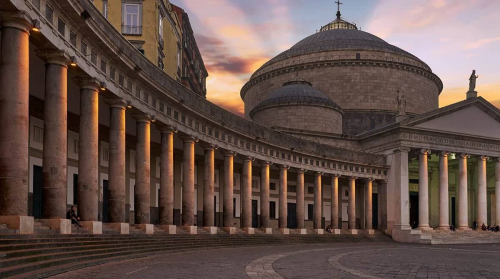
Piazza del Plebiscito
Piazza del Plebiscito is another symbol of the Campania capital. Medieval tournaments were once held in this square, while today it has become a center particularly frequented by young people as well as the heart of the new "Neapolitan Renaissance". This is because it preserves inside both the neoclassical colonnade of the church of San Francesco di Paola and the marvelous Royal Palace. The latter is another place to visit in Naples: the building was built in 1500 on the occasion of King Philip III's visit to the city. Don't miss a tour between the apartment and the royal chapel, the gardens and the Court Theatre.
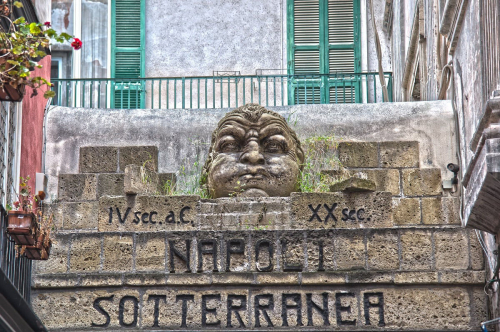
Napoli Sotterranea
Underground Naples is an incredible testimony to the history of the city: in fact, tuff was anciently extracted from the depths of Naples to build the city on the surface. The underground city was used by the Neapolitans as a refuge during the bombings and a source of water and then underwent a recovery process which made it a tourist attraction particularly loved by both families and young people who want to discover Naples from another point of view.
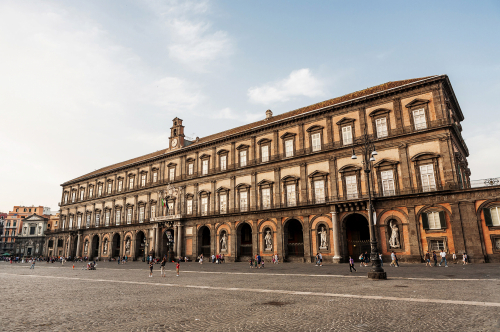
Palazzo Reale
The Royal Palace cannot be missed on a tour of Naples: the building was built in 1500 on the occasion of King Philip III's visit to the city. Don't miss a tour between the apartment and the royal chapel, the gardens and the Court Theatre.
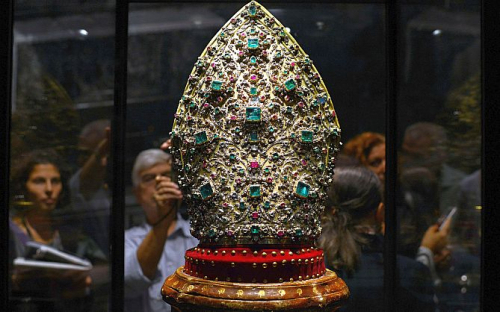
Duomo di Napoli e il tesoro di San Gennaro
Among the religious places that deserve to be visited in Naples there is certainly the Duomo. The Cathedral of Naples is dedicated to the cult of San Gennaro: inside there are in fact the chapel and the treasure of the saint, symbolic elements of the Neapolitans' devotion towards San Gennaro.
The Museum, dedicated to the exhibition of precious works relating to the Treasure of San Gennaro, represents a center of very high historical-artistic and spiritual value and is considered among the richest in the world.
Inside there are jewels, precious objects, documents, silver and paintings donated over the centuries to the Saint by Popes, sovereigns and illustrious men. In the Sacristy, then, frescoes by famous artists are added, including Luca Giordano, Massimo Stanzione and Domenichino.
Positano e Costiera amalfitana
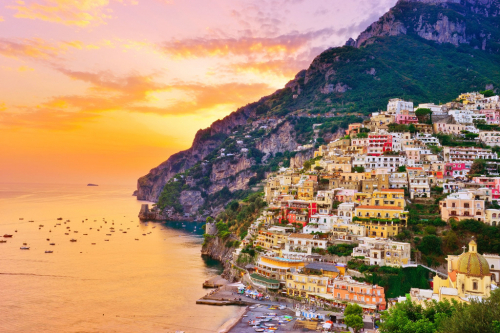
Positano is the village on the Amalfi Coast that enters the heart without leaving it, a concentration of colorful wonders with the scent of lemon and broom. In the province of Salerno there is a small village with incredibly wonderful and breathtaking profiles, its name is Positano, and for centuries it has inextricably won the hearts of its visitors. A real gem of the Amalfi coast, where rock bends overlooking the sea alternate with enchanting alleys scented with lemon and broom. In fact, it is also called "the vertical city" or the "wedding cake" due to its special perched shape, but with bright pastel colours.
Positano e Costiera amalfitana
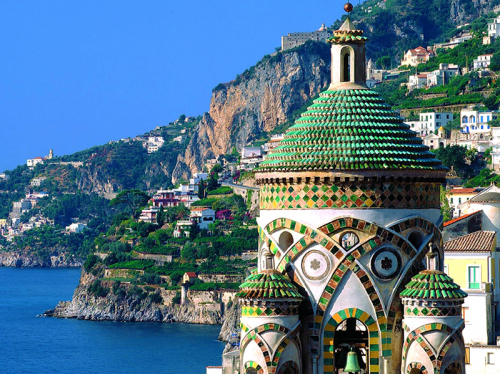
To best appreciate the beauty of the Amalfi coast, you should allow yourself to experience it at a slow pace. There are so many magnificent views and architectural beauties that it preserves, that it would be a shame not to give it all the time it deserves. Walking through its picturesque, sun-kissed streets is an exceptional experience to say the least. The stairs of the pretty houses, nestled on top of each other, intertwine, creating a fairy-tale environment that catapults you directly into a fragrant mirage.